Counter-Surfing and Solutions: Teaching Impulse Control in the Kitchen
Teaching Impulse Control in the Kitchen
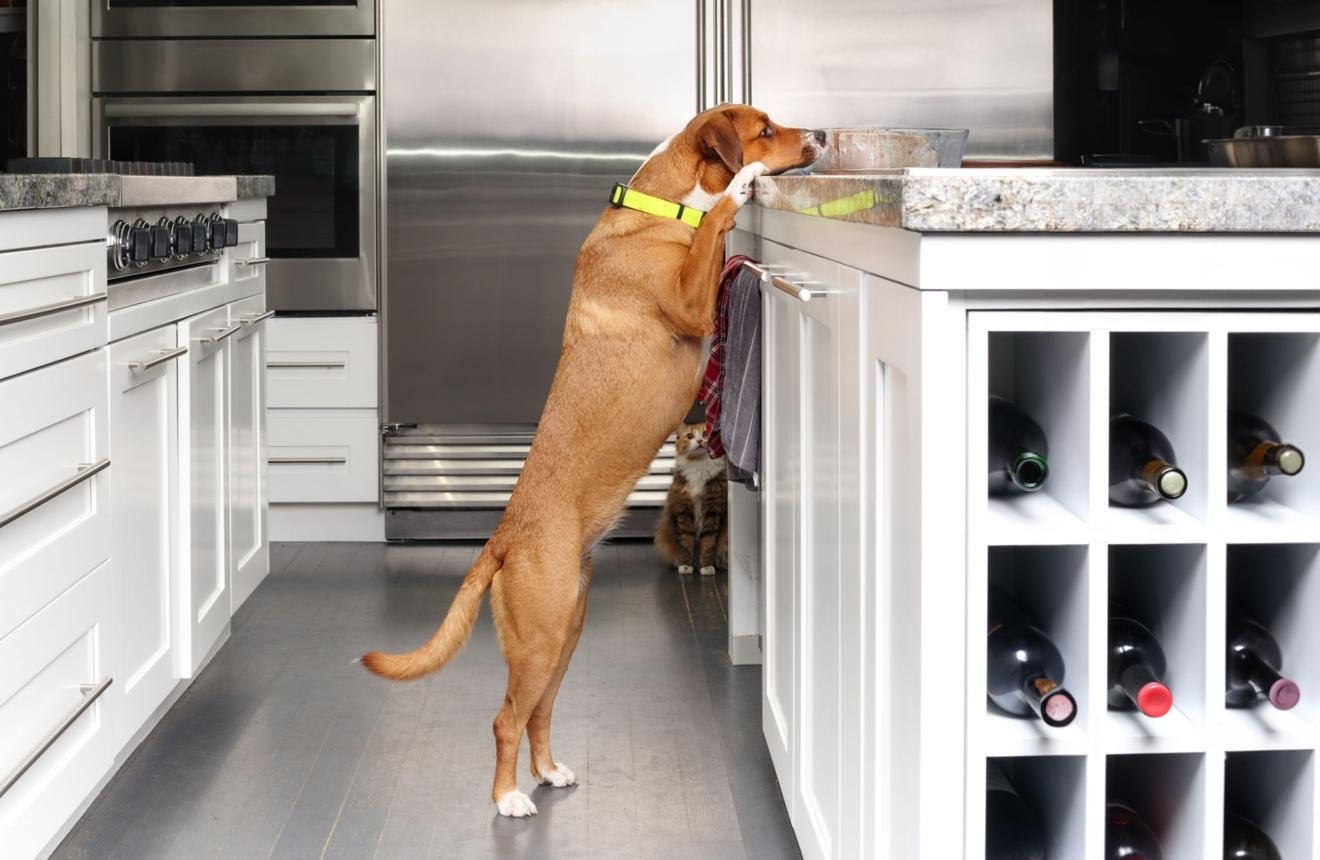
Counter-Surfing and Solutions: Teaching Impulse Control in the Kitchen
Why Dogs Counter-Surf (and Why It Works So Well)
If you’ve ever turned your back for a moment only to find your dog happily helping themselves to food on the counter, you’re not alone. Counter-surfing is one of the most common dog behavior challenges—and one of the most self-rewarding.
From your dog’s perspective, the kitchen is full of opportunity:
- Delicious smells
- Easily accessible food
- Occasional “jackpot” rewards
Even if it only works once in a while, that one success is enough to keep the behavior going. This is why many families end up searching for help with dog behavior problems like stealing food or jumping on counters.
The good news? With the right approach, you can teach your dog impulse control and better choices.
1. Management First: Setting Your Dog Up for Success
Before we focus on training, we need to prevent rehearsal of the behavior.
* If your dog keeps finding food on the counter, they’ll keep trying.
Simple management strategies:
- Keep counters clear of food whenever possible
- Use baby gates or barriers to limit access to the kitchen
- Supervise closely during high-risk times (cooking, meal prep)
- Set your dog up with a designated spot (bed or mat)
This step alone can dramatically reduce counter-surfing while you work on training.
2. Teach an Alternative: “Place” or Settle
Dogs don’t just need to know what not to do—they need to know what to do instead.
Teaching a “place” or “settle” behavior gives your dog a clear job:
“Go to your spot and relax while I’m in the kitchen.”
How to start:
- Choose a mat or bed in or near the kitchen
- Reward your dog for going to and staying on it
- Gradually increase duration
- Practice while you move around, cook, and create distractions
Over time, your dog learns that calm behavior—not counter-surfing—pays off.
3. Build Impulse Control (The Real Game-Changer)
Counter-surfing is ultimately an impulse control issue.
Teaching your dog to pause, think, and make better choices is key—not just in the kitchen, but everywhere.
Helpful exercises:
- “Leave it” → ignore tempting items
- “Wait” → pause before accessing something
- Food bowl patience → sit and wait before eating
- Hand-feeding games → reward calm behavior
These exercises build your dog’s ability to resist temptation, even when food is nearby.
4. Timing Matters: Catch the Choice, Not Just the Mistake
It’s tempting to correct a dog after they’ve already grabbed something—but by then, the reward has already happened.
Instead:
- Watch for moments of good choice
- Reward your dog for staying on the floor
- Reinforce calm behavior near the kitchen
* The more you reward the behavior you want, the more it will happen.
5. What to Avoid
Some common approaches can actually make things worse:
- Punishing after the fact
- Yelling or chasing your dog
- Using inconsistent rules (sometimes allowed, sometimes not)
These can lead to confusion—or a dog who simply learns to counter-surf when you’re not around.
6. Consistency = Success
Like most dog training challenges, consistency is everything.
When everyone in the household:
- Follows the same rules
- Keeps food out of reach
- Reinforces calm behavior
…your dog learns faster and with less frustration.
The Bigger Picture: A Calm, Thoughtful Dog
Teaching your dog to stay off the counters isn’t just about protecting your dinner—it’s about building a dog who can:
- Make thoughtful choices
- Stay calm around temptation
- Trust guidance and structure
That’s the foundation of a well-mannered, confident dog.
Ready for a More Peaceful Kitchen?
If your dog is struggling with counter-surfing or impulse control, you’re not alone—and you don’t have to figure it out by yourself.
Working with a professional dog trainer can help you create a clear plan, stay consistent, and see faster results using positive, effective training methods.
With the right support, your dog can learn to make better choices—and your kitchen can become a calm, enjoyable space again.
Contact Best Buddies at 720-722-2519 or at zori.bestbuddies@gmail.com to set up a free consultation!